Prosperous Robotics
Recovery Intelligence. At Home.
Everyone visits. One person lives there. We build for the twenty-three hours a day nobody is watching.
I remember looking at a doorway that used to be nothing, and knowing I could not reach it on my own.Michael Bankowski, Founder · Service-disabled Air Force veteran
The gap
Recovery does not stop at the hospital door. Support does.
A person goes home with a paper sheet of exercises. No data follows them. The next appointment is six weeks out, and the recovery happens, or fails to, in between.
Stroke incidence and fall cost: Centers for Disease Control and Prevention. Caregiving value: AARP, Valuing the Invaluable, 2026 update.
What Recovery Intelligence actually means
Recovery makes data. Data makes recovery better. That is the whole company.
Most rehabilitation technology is a straight line: a person does an exercise, and that is the end of it. We built a circle instead.
- A person movesAt home, on a Tuesday, with nobody watching. Physical, occupational, speech, or mental health work, guided by Heroes.AI.
- The device sensesJoint-level force, resistance, range, gait cadence. Numbers that need contact with the body, which is not something an app on its own can give you.
- The model learnsHeroes OS pairs that movement with what actually happened: skipped days, clinician corrections, validated outcome scores.
- Tomorrow adaptsThe next session is shaped by every session before it. The loop tightens. Recovery compounds.
A camera measures movement. A wrist measures acceleration. Effort is what you get from hardware on the body.
What we build
Software, hardware, and the person holding it all together.
Software · On the App Store
Heroes.AI
Physical, occupational, speech and mental health therapy in one adaptive home system, shaped around the person day by day.
- Physical
- Occupational
- Speech
- Mental health
Hardware · Physical AI
Heroes Hardware
HandVivante for hand and finger recovery. The Heroes Exoskeleton for walking and balance. Both feed the same record.
HandVivante available · Exoskeleton in research and prototypingWho built the software
Heroes.AI is Maja’s.
Maja Rudinac has led Heroes.AI from the first sketch: the architecture, the direction, the research underneath it and the people building it. In 2014, in Delft, she built LEA, a robotic walker that went into homes and care centres across Europe. She was already making the argument she makes now, that the machine is half of it and the other half is software that learns the person using it.
Heroes.AI is that other half, and it is hers.
Heroes Care · In development
You cannot pour from an empty cup.
There is one person in the house doing the work of a nurse, a therapist, a pharmacist, a driver, and a night shift, with no training and no relief. Heroes Care is built for them: daily movement, breathwork, check-ins, and practical help, on a caregiver's schedule rather than a clinic's.
Help the caregiver and you help everyone downstream of them.
Where this is going
Two robots. Two completely different jobs.
Most of us learned the difference as children. One robot walks in and does the thing for you. The other plugs into the ship, finds the fault and gets you home. The first is a service. The second is a partner.
The humanoid model
C‑3PO does it for you.
He carries, he fetches, he translates, he tidies up after everyone. Genuinely useful, and the industry is racing to build him for good reason. The dishes get washed. Notice what does not happen: the person he is helping is exactly as capable at the end of the day as they were at the start.
The recovery model
R2‑D2 helps you do it yourself.
He never carries anybody anywhere. He reads the system, finds the fault, opens the door that is stuck. The pilot still flies the ship. Every device we build sits on his side of that line.
The humanoid industry is building an extraordinary body. Far fewer people are building the thing that knows what to do when that body walks into a house where somebody is trying to get their life back.
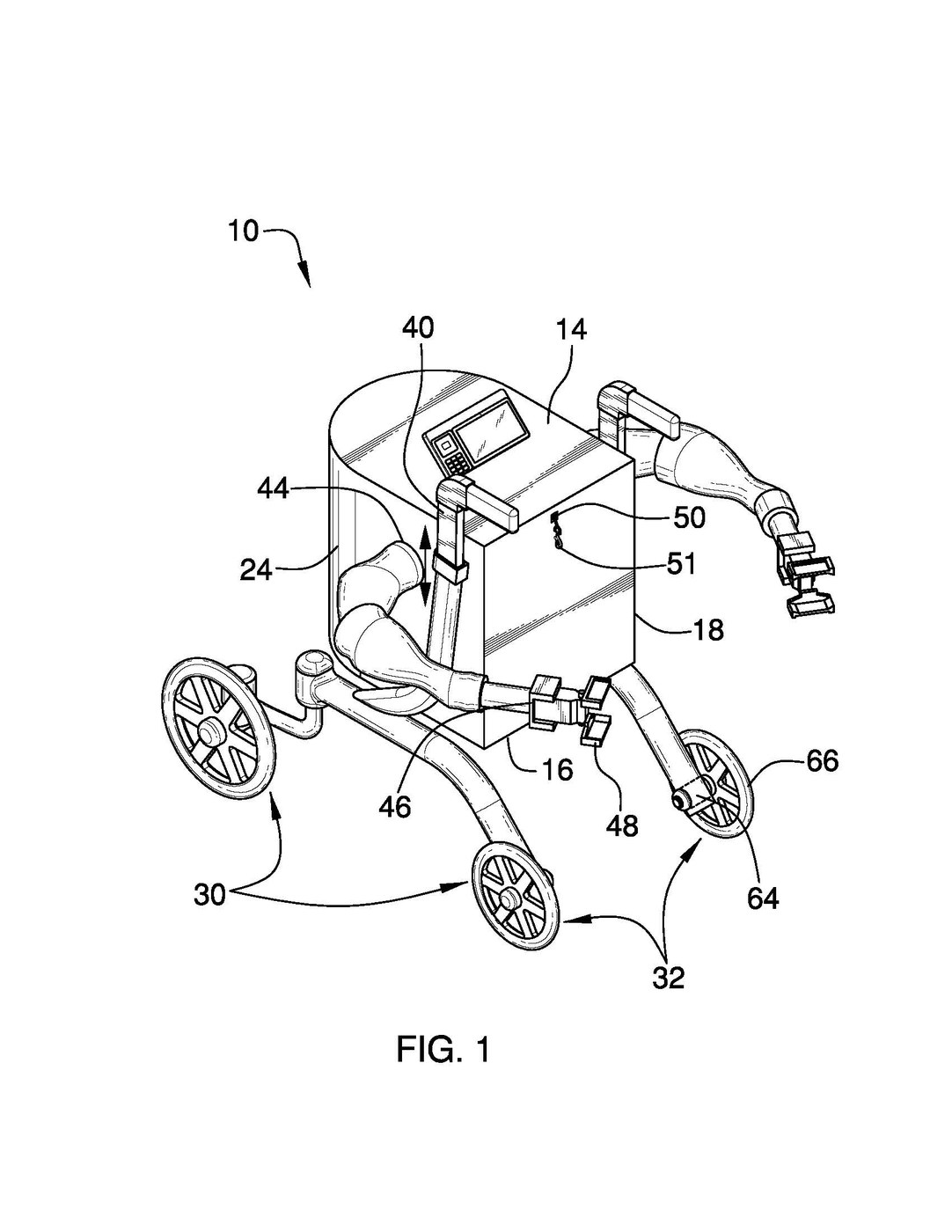
- PatentUS 10,966,897 B2, granted April 2021. An automated walker assembly, drawn by a caregiver rather than a lab.
- The loopHeroes OS pairs joint-level movement with what actually happened next. That pairing cannot be bought or scraped. It has to be lived through.
- Clinical groundingTherapists, occupational therapists and rehabilitation physicians who tell us we are wrong before a patient has to.
- Federal footingTwo registered federal entities with active UEIs and CAGE codes, and an SDVOSB certification held by Prosperous Healthcare LLC. A channel few robotics companies have touched.
- The open roomHome rehabilitation is not a settled category yet. It is a large, unclaimed room in physical AI, and it happens to be the room people actually live in.
If you build humanoids and you have read this far: we are not your competition. You are building the body. We have spent five years on the intelligence that makes a body worth something in a living room at three in the morning. There is a conversation in there.
From people using it
“I absolutely love the Heroes.AI brain games. I'd recommend these to anyone to do, regardless of whether you've had a stroke.”
Lorna, 54 · Stroke survivor
“As a carer, I can help my partner access important activities she should be doing daily, that we wouldn't necessarily have known about. The road to recovery is a long one but this app definitely makes it feel somehow more manageable.”
Keith, 65 · Caregiver
Where it started
A walker, drawn by a caregiver
Not in a lab. Beside hospital beds, in living rooms, on rural farms, by a man who kept meeting the same problem at three in the morning and could not hire his way out of it.
US Patent 10,966,897 B2, granted April 2021. It is named ROSE, after his mother, an Air Force nurse who then spent 33 years at the VA.
Would this be good enough for her?
The home is still open.
We would rather not work on it alone. Health systems, distributors, federal partners, robotics companies, and anyone who has ever sat up at three in the morning with somebody they love.
Start a conversationA nurse's son. An Airman. A caregiver. Now a builder.